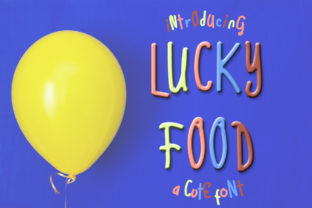
Lucky Food Font: A Versatile Handwritten Typeface for Makers
As a small business owner and product creator, I know the struggle of finding that perfect typeface. You want something that feels authentic and handmade, yet professional enough to sell. Lucky Food is a trendy handwritten font that strikes this delicate balance beautifully. It has been carefully handcrafted to become a true favorite in the creative community because it avoids the overly polished look of digital scripts while maintaining the clarity needed for commercial products. Its casual charm makes it appear wonderfully down-to-earth, readable, and ultimately incredibly versatile for everything from jar labels to wedding signage.
When we talk about fonts in the Script Amp category, readability is often the first casualty. Many display fonts sacrifice legibility for artistic flair, which can be disastrous when you are cutting vinyl stickers or printing small product tags. Lucky Food retains a natural, organic flow that mimics real handwriting without becoming illegible at smaller sizes. This makes it an invaluable asset for crafters who need their designs to communicate clearly while still conveying warmth and personality.
Elevating Product Packaging and Labels
For those of us selling physical goods like candles, soaps, baked goods, or bath bombs, packaging is the first point of emotional connection with the customer. Lucky Food excels here because its visual personality suggests "small batch" and "made with love." When designing labels for mason jars or kraft paper pouches, this font adds a layer of perceived quality that standard system fonts simply cannot achieve.
Consider using Lucky Food for the primary product name or flavor variant on your packaging. Because the letterforms are distinct yet cohesive, they create strong brand recognition. If you are creating a line of seasonal products, this typeface adapts effortlessly. It looks just as appropriate on a rustic autumn candle label as it does on a bright spring tea package. The key is utilizing its down-to-earth aesthetic to reinforce the handmade nature of your items. For best results on packaging, ensure you test print your labels at actual size before mass production to verify that the stroke weight holds up on your specific paper texture.
Practical Applications for Cutting Machines
If you use a Cricut or Silhouette machine, you understand the pain of weeding intricate script fonts. Lucky Food is designed with cuttability in mind. While it is a creative font with character, the connections between letters are generally sturdy enough for vinyl applications. This makes it ideal for:
- Car Decals and Bumpers: Short phrases or family names that need to withstand outdoor elements without breaking apart.
- Mug and Tumbler Designs: Personalized drinkware where the text needs to wrap around a curved surface without losing integrity.
- Shirt Graphics: Casual sayings or boutique logos on apparel where comfort and style intersect.
- Window Clings: Sale announcements or welcome messages for storefronts that require quick application and removal.
Always remember to weld your text in your cutting software before sending it to the machine. Even though Lucky Food is crafted for versatility, welding ensures a single continuous cut line, reducing the risk of peeling edges on finished products.
Designing Stationery and Digital Printables
Beyond physical merchandise, Lucky Food is a powerhouse for stationery designers and digital download sellers. In the realm of wedding invitations and event stationery, couples are increasingly moving away from stiff, formal calligraphy toward relaxed, modern typography. This font fits perfectly into the "casual elegant" niche. It works beautifully for welcome signs, seating charts, and menu cards where you want guests to feel at ease rather than intimidated by formality.
For printable creators, this typeface offers excellent value. Whether you are designing daily planner pages, habit trackers, or wall art quotes, Lucky Food provides a focal point that draws the eye without overwhelming the layout. When creating digital downloads, consider offering variations where this font is used for headers or inspirational words, paired with functional text in a simpler typeface. This increases the perceived utility of your template, making it more attractive to buyers looking for both beauty and function.
Mastering Font Pairings for Professional Results
A common mistake in product design is letting a beautiful script font do all the heavy lifting. To make Lucky Food shine, you must pair it correctly. As a display font, it demands a supporting actor that grounds the design.
- Clean Sans Serif: Pair Lucky Food with a geometric or humanist sans serif font for product descriptions, ingredients lists, or contact information. The contrast between the organic curves of the script and the structured lines of the sans serif creates a modern, high-end look.
- Classic Serif: For wedding stationery or heritage-style branding, combine Lucky Food with a traditional serif font. This pairing evokes nostalgia and timelessness, perfect for heirloom-quality products.
- Bold Display: If you are designing posters or social media graphics, try placing Lucky Food over or intertwined with a bold, condensed display font. This creates dynamic tension and hierarchy, guiding the viewer’s eye exactly where you want it.
Avoid pairing Lucky Food with other highly decorative scripts. Competing personalities will clutter your design and reduce readability. Let this handwritten font be the star, and use neutral typefaces to support the message.
Technical Considerations and Licensing for Sellers
Before incorporating Lucky Food into your shop, take time to explore the included files. Premium fonts often come with valuable extras that can elevate your work. Check for OpenType features such as alternate characters, ligatures, and swashes. These details allow you to customize the spacing and flow of specific word combinations, preventing awkward gaps or collisions that can occur in digital scripts. Using alternates can make repetitive text, like multiple gift tags, look uniquely hand-lettered rather than copy-pasted.
Equally important is understanding the licensing terms. As a commercial creator, you must ensure your usage rights cover your specific business model. Generally, a standard commercial license allows you to use the font to create physical end products like shirts, mugs, and printed cards. However, if you plan to sell editable templates (like Canva links) or digital assets where the end user also accesses the font file, you may require an extended or special license. Always review the specific license agreement provided with Lucky Food to protect your business and respect the type designer's intellectual property.
Finally, consider multilingual support if you serve a diverse customer base. Many modern handwritten fonts include extended character sets for European languages. Verifying this beforehand saves frustration when a client requests a custom order in French or Spanish. By treating Lucky Food not just as a decorative element but as a functional tool in your production workflow, you unlock its full potential to enhance your brand identity and connect authentically with your audience.